Man to compete in 'incredibly difficult' ‘mind control’ race
‘Mind control’ races could revolutionise treatments
11 July 2024 Audrey Dias
BBC News,
A man hopes to inspire and help other disabled people when he takes part in virtual races using only his brainwaves.
Owen Collumb, 53, from Dublin, was left paralysed from the chest down after a motorcycle accident in 1993.
He is now training alongside scientists at the University of Bath to compete in Cybathlon 2024 in Zurich this October. The races range from wheelchair, bike and track events.
"This technology will go on to the medical field and probably have some major impact on people's lives," he said.
"People who have locked-in syndrome, people who are non-verbal, and people like myself, it will give the possibility of having more freedom," said Mr Collumb.
He is entering the brain computer interface race, hoping to complete four challenges in the fastest time, with the support of his engineer.
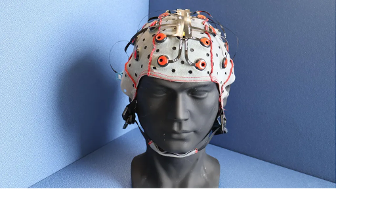
The technology that enables this brainwave control was invented by University of Bath scientists, who research and develop headsets that can act as interfaces between the brain and computers.
"It's incredibly difficult to move things with your brain, to get your brain to light up at the correct time in the certain area that you want to, but it can be done.
"The Cybathlon is more than just a computer game.
"It's about empowering disabled people to take control of their lives, normalising disability and helping people become a valuable part of their communities," said Mr Collumb.
After his accident, Mr Collumb was moved into a residential home at the age of 21.
"I didn't want to be there, with decisions being made for me and very little control over my life," he said.
"I had to campaign for eight years to be able to move back to the community."
Several decades on, Mr Collumb now lives in his own home, works and volunteers.
He said that being in control of his life and able to contribute to society means he does not have to think about his disability - and he wants to help others do the same.
In 2011, Mr Collumb started working with the University of Bath as a participant in a study that involved 10 spinal injured athletes.
He felt compelled to take part in the competition, as he believes the technology will be "hugely important" in the future.
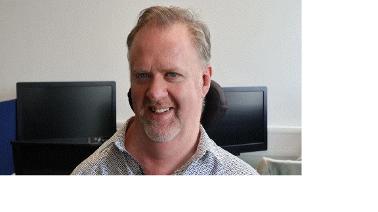
Owen Collumb became paraplegic after a motorcycle accident
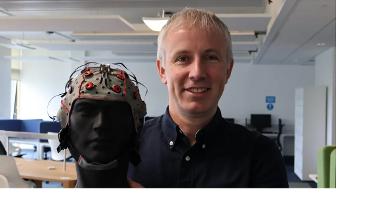
Professor Damian Coyle has been working on smart assistive technologies for 20 years